DEPARTMENTS
A. The Hillary ModelB. Sport enterprise initiatives
C. Celebrity philanthropy
D. Promotional feats
E. Extremes
F. Team sports
G. Promotional events
H. Recurrent events
I. Global and regional games
J. Sport tourism
K. Diplomacy
L. Sport-Dev-Peace news
M. Dance
N. Martial Arts
O. Left Field
We're members!

Dr. Harshwanti Bisht, Indian mountaineer and conservationist, wins Sir Edmund Hillary Medal Mountain Legacy Medal
During our [1984 Indian] Everest Expedition we saw how Sir Edmund Hillary has worked in that area. So that also inspired us to work... (Indian mountain climber and ecologist Harshwanti Bisht, explaining her motivation to "save Gangotri.")
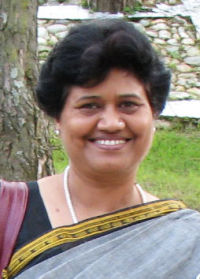
Professor of economics, and conservationist, and mountaineer Dr. Harshwanti Bisht has been selected to receive the Sir Edmund Hillary Mountain Legacy Medal. According to Dr. Beau Beza, Program Director in the School of Global, Urban and Social Studies at the Royal Melbourne Institute of Technology, the award is presented "for remarkable service in the conservation of culture and nature in mountainous regions. The medal both recognizes Sir Edmund Hillary's own service on behalf of mountain people and their environment and also encourages the continuing emulation of his example."
In 1981 Harshwanti Bisht, Rekha Sharma and Chandra Prabha Aitwal were the first three women to summit the main peak of Nanda Devi (7,816m). Bisht was also a member of the Indian expedition to Mt. Everest, in 1984. However, as Beza points out, the Hillary Medal is awarded for philanthropic achievements, not for sports achievements:
For 25 years, since 1989, Dr. Bisht has labored to improve conditions in the Gangotri area of Uttarakhand, at the headwaters of the Ganges in northern India. Her Save Gangotri project has planted tens of thousands of saplings, organized eco-awareness campaigns, propagated endangered medicinal herbs, and introduced ecotourism standards to an area that had been ravaged by climate change and unregulated pilgrimage.
Dr. Bisht, like other mountaineers, shifted her focus from recreation to conservation and sustainable high altitude tourism development as a direct result of the work of Sir Edmund Hillary:
When I was in Khumbu with the 1984 Indian Everest Expedition, I saw the great effect of Sir Edmund Hillary's work to conserve the natural environment and to bring economic opportunities to the Sherpa communities. So that inspired me to work in Gangotri, which is one of the holiest pilgrimage sites but faces many great challenges, both in protecting the environment and in serving the needs of the various stakeholders.
Bisht has had remarkable success in restoring the birch forests around Gau Mukh (Cow Snout), the terminal area of Gangotri Glacier, ravaged by the double-whammy of unmanaged pilgrimage and mass-market tourism as well as climatic change. As the forests take hold, they have an increasingly significant impact in increasing humidity and lowering local temperatures. According to Kumar Mainali, president of Mountain Legacy and editor of Himalayan Journal of Sciences, this labor-intensive approach is an extremely positive development:
Dr. Bisht's great contribution needs to be seen in the context of the Chipko Andolan, the movement of village women who used place their bodies in the path of large-scale commercial timber operations in an effort to empower, or recover the power, of local forest managers. That grassroots movement inspired similar actions around India, and had a significant impact in slowing the rate of deforestation. Dr. Bisht's plantations are located in Uttarkashi district, adjacent to Chamoli, epicenter of the Chipko movement. Like the Chipko heroes, Dr. Bisht is showing that the action of a committed woman can make a difference against forces that seem irresistible. In this case, Dr. Bisht and her colleagues are reforesting the ancient birch stands alongside Gangotri glacier, creating a slightly cooler microclimate that Dr. Bisht hopes will slow the glacier's recession. Like all new grassroots efforts, it sounds quixotic, but it is not. If we don't pitch in and help, our loss will be incalculable.
In 1994, Dr. Bisht published a monograph entitled Tourism in Garhwal Himalaya: With Special Reference to Mountaineering & Trekking in Uttarkashi and Chamoli Districts. This study is a blueprint for integrated mountain development, embracing a full panoply of opportunities, objectives, challenges, and action proposals. One of the key findings of Dr. Bisht's study is that there is a convergence between pilgrimage and adventure tourism, in terms of destinations as well as amenity requirements. Her chapter on "Elements of Adventure Tourism" begins with the point that mountains are sacred because they possess beauty and they inspire mankind to meditate and grow spiritually; for that reason, to the Indian mind Himalaya and holiness are inseparable. More important, she finds not only that adventure tourists are increasingly pursuing goals similar to those of traditional pilgrims, but also that a large proportion of self-identified pilgrims actually share the values of secular tourists. Travel for them is not intentionally painful, and self-abnegation does not apply to infrastructure, waste management, or safety. The old model of pilgrimage (more the toil, higher the religious attainment and salvation) no longer holds good in general, Bisht observes. People demand comforts during their pilgrimage.
Sue Badyari, CEO of World Expeditions, a leader in responsible travel and a major supporter of the Hillary Medal, commented on the selection of Dr. Bisht as recipient of the 2013 Hillary Medal:
We at World Expeditions are delighted to see Dr. Harshwanti Bisht receive this award. We have long admired her work in rehabilitating the Gau Mukh ecosystem and in promoting responsible practices among visitors, hosts, and policy makers. Dr. Bisht's idea of creating a network of women's mountaineering clubs is both audacious and clearly needed. These young climbers will go on to take jobs, launch companies, serve in government agencies, and raise families, where they will spread their commitment to mountain recreation, conservation, and empowerment of local communities. World Expeditions has a long tradition of partnering with indigenous groups promoting responsible travel, and we look forward to collaborating with Dr. Bisht.
Mountain Power!
Dr. Bisht is currently embarking on a new project, in collaboration with Mountain Legacy. Mountain Power will be a network of women's mountaineering clubs affiliated with colleges and universities throughout the Himalayan region, and eventually worldwide. The goals of the project are summarized in the mission statement:
A 'sport for development and peace' program, building transboundary highland-lowland cooperation among women for challenging recreation, responsible tourism, health, entrepreneurial leadership, and sustainable stewardship of the natural and cultural legacy of mountains.
The central rationale, which is also the theme of the United Nations' Sport for Development and Peace program, is that sports are useful for the development of the individual, for interpersonal relations, and for larger social constructs. Sports opportunities for women have lagged far behind those for men, particularly in developing regions, depriving women of recreation, physical challenges, and leadership training. Mountain Power clubs would not only provide girls and young women experience in sports such as climbing, trekking, skiing, and rafting, but would also foment interest in conserving nature, protecting cultural sites, and developing economic opportunities in remote communities. The implementation of an international network of such clubs would allow for safe and economical exchange excursions by individuals or teams, as well as collaborative projects bringing together clubs from many schools.
Empowerment of women is vital to our region, especially in poor mountain communities, says Dr. Bisht.
Women need the confidence and the skills to become entrepreneurs, leaders, and policy makers. As mountaineers, they will combine sports with practical work in recreation planning and economic development. They will undertake projects of their own choosing, whether waste management, or afforestation, or trail improvement, or infrastructure design, or whatever seems useful, always mindful of the objectives of gender equity and responsible stewardship.
Dr. Bisht will be announcing an organizational meeting for those interested in launching Mountain Power clubs in their own schools, and she will also conduct a training program for club supervisors, time and place to be announced. For more information, see the Web site www.MountainPower.org or contact Dr. Bisht at bisht@mountainpower.org.
The Sir Edmund Hillary Mountain Legacy Medal will be presented to Dr. Harshwanti Bisht in Kathmandu on March 18, 2014. Peter Hillary, who will be presenting the award, commented that
Sixty years after my father and Tenzing Norgay climbed Mt Everest this recipient of the Hillary Medal will close the circle. For years Dad's example challenged other mountaineers to 'give back' to the communities who helped them in their mountaineering endeavours and to help preserve the mountain environment. A few have heeded the call, and among them is Dr. Harshwanti Bisht. She has undertaken mountain conservation projects and actively encouraged young mountaineers to contribute to the needs of mountain communities. I think my father would be pleased.
More Information
For more information about Dr. Bisht's work in Gangotri, visit SaveGangotri.org.
For more information about MountainPower, visit MountainPower.org.
Moving Mountains (MM) is an online journal dedicated to the United Nations theme of sport for development and peace. The journal focuses on mountainous regions, including lowland gateways, but peripheral attention is paid to exemplary developments in lowland and oceanic regions. MM is a project of Mountain Legacy in collaboration with Himalayan Journal of Sciences, which in turn is a project of the Himalayan Association for the Advancement of Science).
Gray Links: Some of the departments listed in the directory at left are still empty. Check the Update page for notice of new material posted.
An overview of journal content is available here. If you are interested in collaborating on Moving Mountains, please click here.
Advertising: Moving Mountains accepts paid advertising as well as pro-bono links.
"Papa Tony" Freake Made Things Happen in Phortse
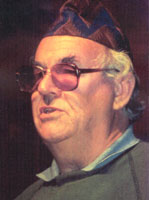 "Papa Tony" Freake
Photo courtesy of T. Freake |
In 1989 British national Papa Tony, as Mr. Anthony John Freake is known to the Sherpas of Khumbu, visited Phortse for the first time in the course of a shake-down trek prior to climbing Mt. Mera. Phortse is a community of about 400 Sherpas in the Khumbu District of Nepal, perched on an isolated terrace approximately 3800 meters above sea level and about 15 km southwest of Mt. Everest.
I immediately fell in love with the village and its people, Tony explained. I felt the village was so poor, so lacking in the basic amenities had by other villages in the Khumbu, that I had to come back and do what I could to help the community. The following year in 1990 I formed the Phortse Community Project.
In 1992, Mr Freake built a house for the schoolteachers at Phortse, and since then his PCP has undertaken numerous development projects including a health clinic, hydroelectric plant and electricity supply system, Tibetan Buddhist monastery, youth club, drinking water supply system, multipurpose community building and educational scholarships. [ More ]
Sponsor:
Royal Melbourne Institute of Technology University
Contributing intellectually and practically to the development of equitable and sustainable societies
Contact: Prof. Beau Beza (Email: beau.beza@rmit.edu.au)
Nominations Open for Seventh Hillary Medal
The Sir Edmund Hillary Mountain Legacy Medal is awarded for “remarkable service in the conservation of culture and nature in mountain regions" in any part of the world. The Hillary Medal is a project of Mountain Legacy, a Nepalese NGO, reg. #1018/060-61 (www.mountainlegacy.org).The Hillary Medal was officially authorized by Sir Edmund Hillary in 2003 and is supervised by Peter Hillary on behalf of the Hillary family. The next Hillary Medal will be the seventh in the series.
For more information on the Hillary Medal and the nomination procedure, see www.hillarymedal.org and/or contact Dr. Beau Beza at beza@hillarymedal.org. [ More ]
Rachel Maddow's Operation Iraqi Baseball
When it comes to moving mountains, there's no leverage like celebrity. In this case, the celebrity has direct access to her own little bully pulpit -- MSNBC News. This clip doesn't stress the impact of Maddow's gesture, but we can guess that there are payoffs not just for Iraqis (pride in a well-equipped national team, relief that recreation is making a comeback, hope for an economy prosperous enough to support organized sports) but also for Iraqi-US relations. [ More ]
Chris Waddell: Shining a Light on the Disabled Community
[From Waddell's Web site] Chris Waddell has dedicated his life to defying the conventional wisdom of what a paraplegic can and cannot do. Through his work with the Paralympics, Waddell has proven that being a "para" doesn't mean living a disabled life. Waddell's athletic abilities garnered international attention and have helped to change the way disabled individuals are viewed.
The decision to summit Kilimanjaro is intended to "shine the light back on the disabled — to show that if you take the time to look, you might be surprised." Waddell hopes that his incredible climb will provide a counterpoint to people's preconceived notions. "I hope my climb will make us see some of the 21+ million disabled people in the world in a whole new way," says Waddell.
More Information: www.one-revolution.org/; Outside.online
Posted on PatDollard.com:
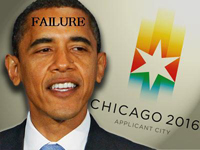
Olympics: Good for Development?
American conservatives howled with glee at President Obama's "failure" to win the 2016 Olympics for Chicago. Setting aside the predictable hypocrisy of the Republican pretense that the decision represented a rejection of Obama, his policies, and the Democratic Party in general, it is worth noting that there actually are arguments that the Olympics aren't such a great thing for the host country. [ More ]